APPOINTMENTS / INTAKE / PATIENT FLOW / COMMUNICATION / ADMIN / VISIBILITY
Healthcare systems built for better coordination, cleaner operations and clearer patient flow.
Jenrix builds healthcare CRM and operations systems for clinics, hospitals, diagnostic centres and care networks that need better appointment handling, patient intake, internal coordination, communication and management visibility.
Instead of running key operational steps through separate registers, phone calls, spreadsheets, WhatsApp and manual reminders, the workflow can be managed through one connected digital system designed around how the organisation actually operates.
APPOINTMENT CONTROL
PATIENT INTAKE
STAFF COORDINATION
OPERATIONS VISIBILITY
JENRIX / HEALTHCARE OPERATIONS ENGINE
Book → Intake → Coordinate → Serve → Update → Monitor
OPERATIONS ACTIVE
APPOINTMENTSLIVE
INTAKEACTIVE
PATIENT FLOWVISIBLE
COMMUNICATIONALIGNED
OPERATIONSMONITORED
JENRIX CORE
CARE OPS
APPOINTMENT / INTAKE / FLOW / CONTROL
LIVE OPERATIONS EVENT
APPOINTMENT CONFIRMED / INTAKE READY
THE OPERATING REALITY
01
Every appointment should have a clear status, owner, patient context and next action.
The system should help teams understand who is arriving, what is scheduled, what information is pending, where the patient is in the operational flow and what needs to happen next.
Book
Prepare
Coordinate
Follow Up
WHERE HEALTHCARE OPERATIONS BREAK
Operational friction usually appears between scheduling, intake, coordination and follow-up.
Healthcare teams already work under time pressure. Fragmented administrative systems create extra calls, repeated data entry, unclear status and avoidable coordination effort.
Appointments Are Managed Across Channels
Calls, walk-ins, forms and messaging create fragmented booking and rescheduling activity.
Patient Intake Repeats Information
Teams repeatedly collect details and documents because intake data is not structured well.
Status Is Hard to See
Front desk and operational teams may not know exactly where a patient is in the process.
Communication Is Manual
Reminders, confirmations, rescheduling and follow-up messages require repeated staff effort.
Admin Tasks Depend on Individuals
Approvals, exceptions, task handoffs and operational issues can remain outside the main system.
Management Visibility Comes Late
Scheduling load, pending actions, team activity and workflow delays are often visible only after manual reporting.
JENRIX HEALTHCARE OPERATING SYSTEM
One connected flow from appointment booking to operational follow-up.
Jenrix structures healthcare systems around operational coordination, administrative workflows and visibility — not around isolated software screens.
Every stage depends on separate tools and manual staff coordination.
- Appointments live across calls, forms and individual calendars
- Patient intake is repeated or incomplete
- Operational status is not visible to the right team
- Communication depends on manual reminders
- Management lacks live workload visibility
Scheduling, intake, operations and communication become one workflow.
- Appointments enter one structured scheduling process
- Patient information stays linked with the visit context
- Status changes can be visible across the operational team
- Communication can respond to workflow events
- Dashboards show activity, pending work and capacity live
HEALTHCARE TECHNOLOGY CAPABILITIES
Systems designed around appointments, coordination, administration and visibility.
Jenrix can combine scheduling, CRM, communication, operational workflow, admin control and dashboards into one healthcare-focused platform.
Appointment Systems
Booking, slot management, confirmations, reminders, rescheduling, cancellation and appointment status.
Patient Intake Workflows
Patient details, visit information, forms, documents, registration status and intake preparation.
Operational Patient Flow
Check-in, queue or stage visibility, internal handoffs, service status and next-step coordination.
Communication Automation
Appointment reminders, confirmations, rescheduling notices, follow-up messages and internal alerts.
Admin & Task Workflows
Internal tasks, approvals, exceptions, staff coordination, support activity and operational accountability.
Operational Dashboards
Appointments, service load, pending work, delays, activity, team output and management visibility.
Multi-Location Operations
Shared visibility across clinics, diagnostic centres, branches or healthcare network locations.
AI Support Layers
Administrative assistance, summaries, workflow guidance and operational support where appropriate.
HEALTHCARE SYSTEM REFERENCE
The goal is not another dashboard. It is smoother operational coordination.
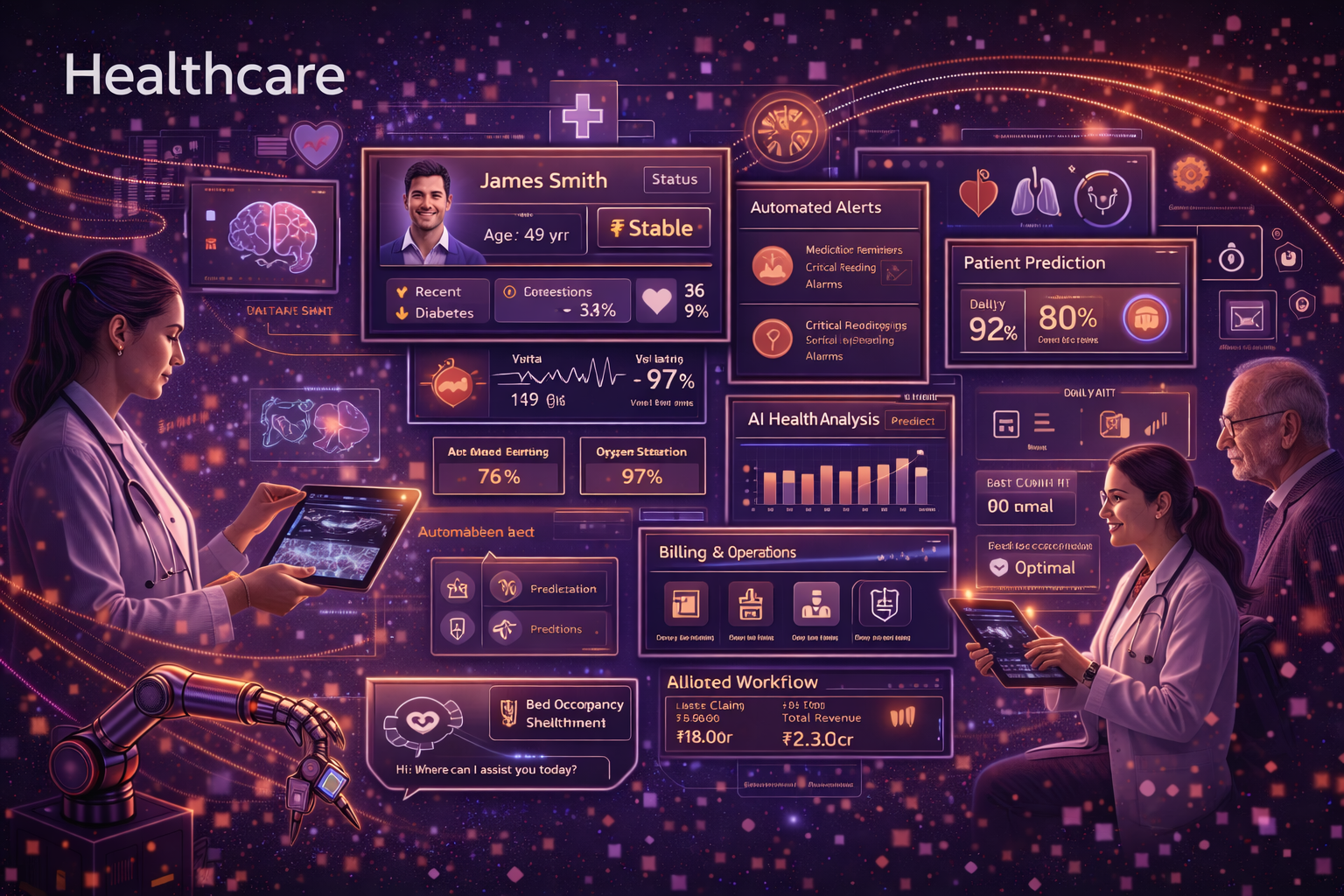
Your existing healthcare visual remains as a supporting reference, while the live architecture above explains how scheduling, intake, patient flow, communication and admin visibility connect.
JENRIX / HEALTHCARE TECHNOLOGY REFERENCE
HEALTHCARE OPERATIONS FLOW
Every scheduled visit should move through a visible operational journey.
The exact stages vary by clinic, hospital or diagnostic centre, but the system should make ownership and status clear at every step.
01
Book
Appointment is created with the required service, location and timing context.
02
Confirm
Confirmation, reminder and any preparation information are communicated.
03
Intake
Patient details, forms, visit information and required documents are prepared.
04
Coordinate
Operational teams can see the current stage, owner and next action.
05
Complete
The operational visit status is recorded and the next workflow step is determined.
06
Follow Up
Follow-up communication, return visits or internal tasks are triggered where required.
WHO THIS IS FOR
Healthcare technology for appointment-driven and operations-heavy organisations.
Clinics & Specialty Practices
Manage appointments, intake, staff coordination, communication and daily operational visibility.
Hospitals & Care Networks
Support operational workflows, internal coordination, admin processes and management dashboards.
Diagnostic Centres
Structure bookings, registration, visit stages, communication and operational workload.
Multi-Location Healthcare Groups
Centralise appointment and operational visibility across branches while preserving local workflows.
Healthcare Platforms
Build digital appointment, onboarding, communication, admin and service coordination systems.
Operations Leadership
Track appointment volumes, delays, pending actions, workload and team activity through dashboards.
HEALTHCARE TECHNOLOGY FAQ
Questions before building a healthcare operations system.
Can Jenrix replace spreadsheet-based appointment tracking? +
Yes. Appointment status, patient intake, reminders, internal task movement and operational visibility can be moved into a structured workflow system.
Can appointment reminders and rescheduling messages be automated? +
Yes. Confirmations, reminders, rescheduling notices, follow-up messages and internal alerts can be tied to appointment and workflow events.
Can the system support multiple clinics or locations? +
Yes. Multi-location systems can provide shared management visibility while keeping branch-level schedules, users, operational workflows and activity organised.
Can dashboards show appointment load and operational delays? +
Yes. Depending on the available data and system design, dashboards can show appointment volume, waiting states, pending tasks, service load and operational bottlenecks.
RELATED JENRIX HEALTHCARE ENGINEERING
BUILD THE OPERATIONAL WORKFLOW INTO THE SYSTEM
Healthcare teams should spend less time coordinating the process manually.
Share your appointment process, patient intake flow, staff coordination model or admin requirement. Jenrix can help design the digital workflow around how your healthcare organisation actually operates.